The Ubiquity Of Exoplanets: A New Era In Astrophysics Research
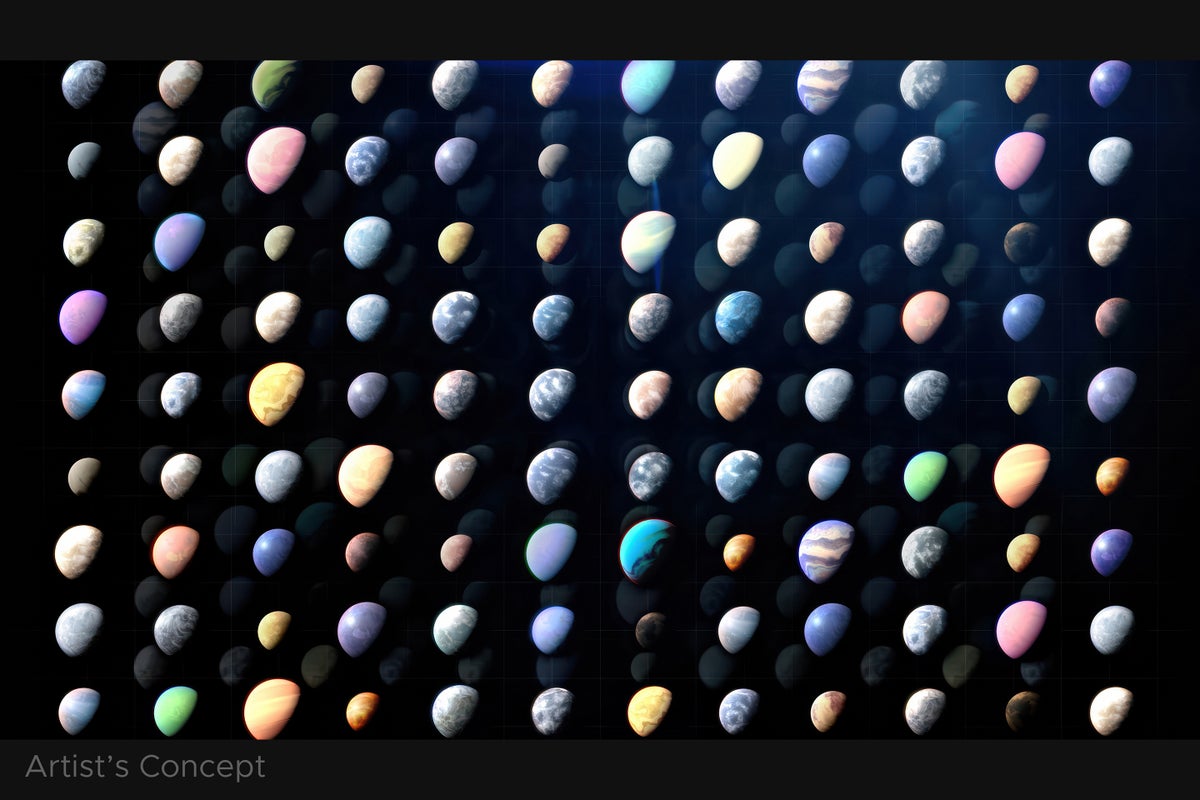
The universe, in its vast expanse, has yielded a secret: the existence of thousands of exoplanets. This revelation has been unfolding since 1992, when astronomers first detected planets beyond our solar system. The milestone of 6,000 confirmed exoplanets has been reached, with 18 new additions, mostly rocky worlds between the size of Earth and Neptune. These discoveries have been facilitated by a combination of ground telescopes, NASA's Transiting Exoplanet Survey Satellite (TESS), and archival data from the Kepler space telescope.
Jessie Christiansen, chief scientist of the NASA Exoplanets Institute, remarks on the ubiquity of planets, stating that "everywhere we look, we find planets." This phenomenon is both astonishing and reassuring, suggesting that our solar system is not an anomaly. The sheer number of exoplanets discovered has enabled researchers to transition from a "stamp-collecting" phase to a more physics-driven approach. Christiansen envisions a future where scientists can probe the underlying mechanisms governing planet formation, evolution, and migration.
With a sufficiently large sample size, researchers can begin to discern the dominant physical processes at play. This shift in focus from descriptive to explanatory inquiry is, for Christiansen, the most exciting aspect of ← →
Since astronomers found the first planets outside our solar system in 1992 and the first planet around a sunlike star in 1995, scientists have ...You might also find this intersting: Visit website


Comments
Post a Comment