600 Million Spacecraft To Study Space Weather And Solar Activity
Today, a Falcon 9 rocket pierced the morning sky, lifting off from NASA's Kennedy Space Center in Florida at 7:30 a. m. EDT. The mission was to deploy three probes into space, each with its own objectives, yet collectively striving to unravel the mysteries of space weather and its profound impact on Earth. These probes are destined for the sun-Earth Lagrange Point 1, a gravitationally stable location approximately 930,000 miles from Earth, in the direction of the sun.
At the forefront of this mission is the Interstellar Mapping and Acceleration Probe (IMAP), the primary payload of today's launch. This sophisticated spacecraft, valued at roughly $600 million, is equipped with 10 distinct science instruments. These instruments will enable IMAP to monitor solar activity, study interstellar dust, and analyze the solar wind – a continuous stream of charged particles emanating from the sun.
The data collected by IMAP will be instrumental in mapping the outer boundary of the heliosphere, a vast bubble surrounding our solar system, dominated by the sun's solar wind and magnetic field. IMAP will provide critical radiation warnings for astronauts, particularly those involved in NASA's Artemis program, which aims to establish a sustained human presence on and around the moon.
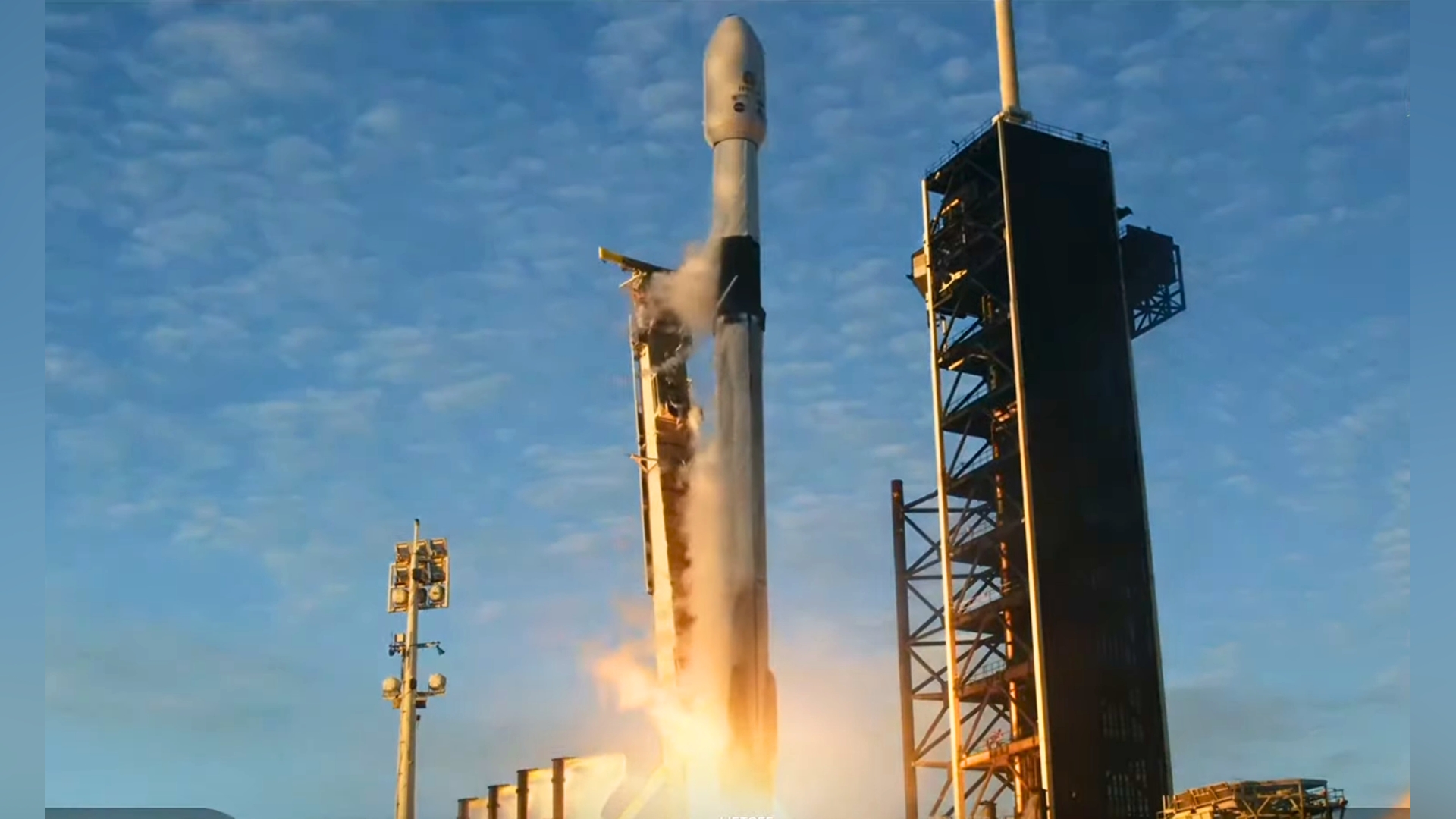
A Falcon 9 rocket lifted off from NASA's Kennedy Space Center in Florida today (Sept. 24) at 7:30 a.m. EDT (1130 GMT)You can find out even more here: Check here


Comments
Post a Comment