The Surprising Way Rising CO2 Could Supercharge Space Storms
 More details: See here
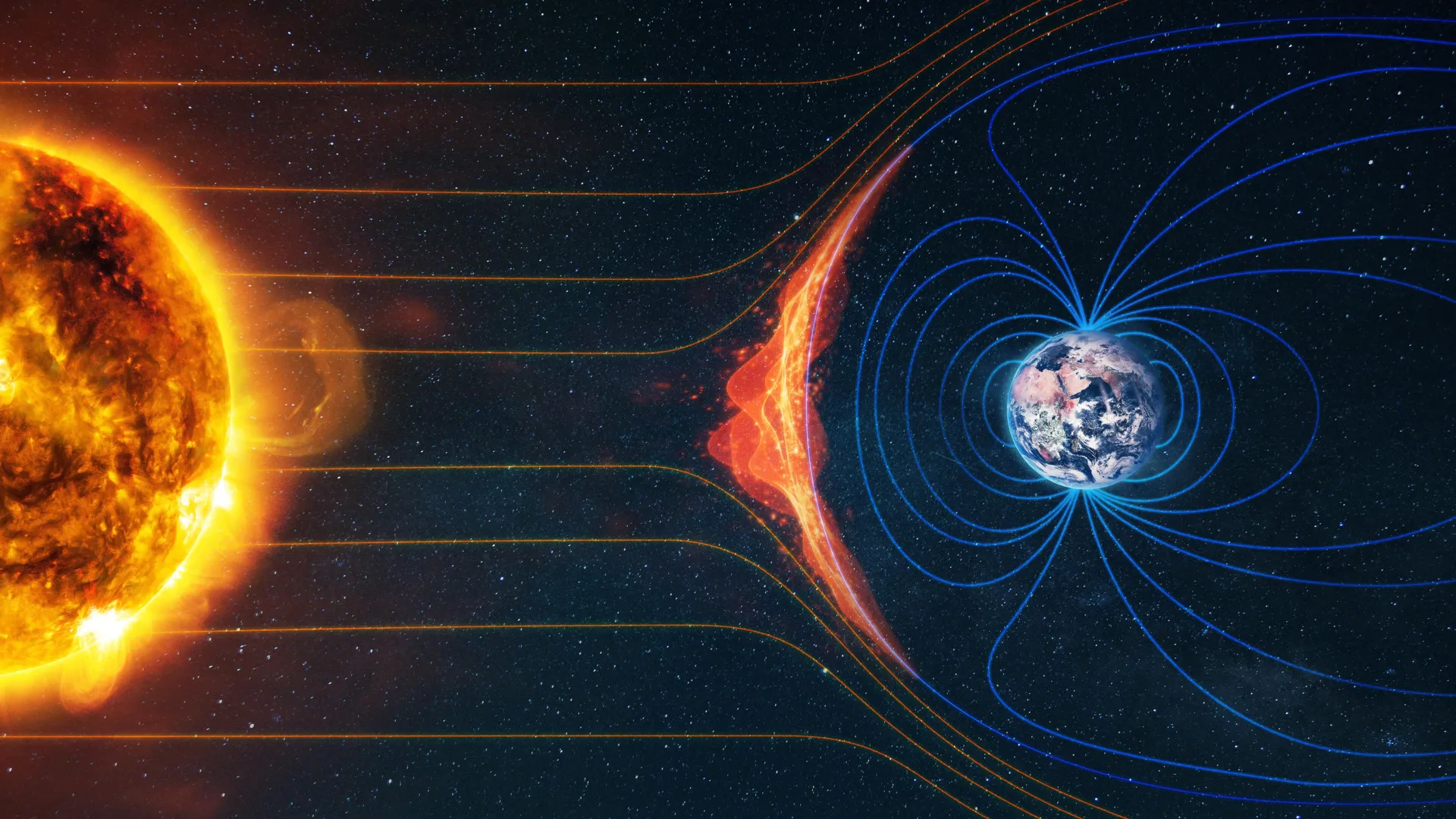
Rising concentrations of carbon dioxide in the upper atmosphere will change the way geomagnetic storms impact Earth, with potential implications for thousands of orbiting satellites, according to new research led by scientists at the US. National Science Foundation National Center for Atmospheric Research (NSF NCAR).
Geomagnetic storms, caused by massive eruptions of charged particles from the surface of the Sun that buffet Earth's atmosphere, are a growing challenge for our technologically dependent society.
The storms temporarily increase the density of the upper atmosphere and therefore the drag on satellites, which impacts their speed, altitude, and how long they remain operational.
The new study used an advanced computer model to determine that the upper atmosphere's density will be lower during a future geomagnetic storm compared with a present-day storm of the same intensity.
That's because the baseline density will be lower, and future storms won't increase it to levels as high as what occurs with storms currently.
The study, a collaboration with Japan's Kyushu University, was published in Geophysical Research Letters .
Earth's upper atmosphere has become increasingly important in recent decades because of society's dependence on advanced navigation systems, online data transmission, national security applications, and other technologies that rely on satellite operations.


Comments
Post a Comment