The Disappearing Planet Next Door Has Astronomers Intrigued
 Reference: See here
Found using the MIRI instrument on NASA's Webb telescope, which was managed by JPL through launch, the possible planet would be easier to study than more far-flung worlds.
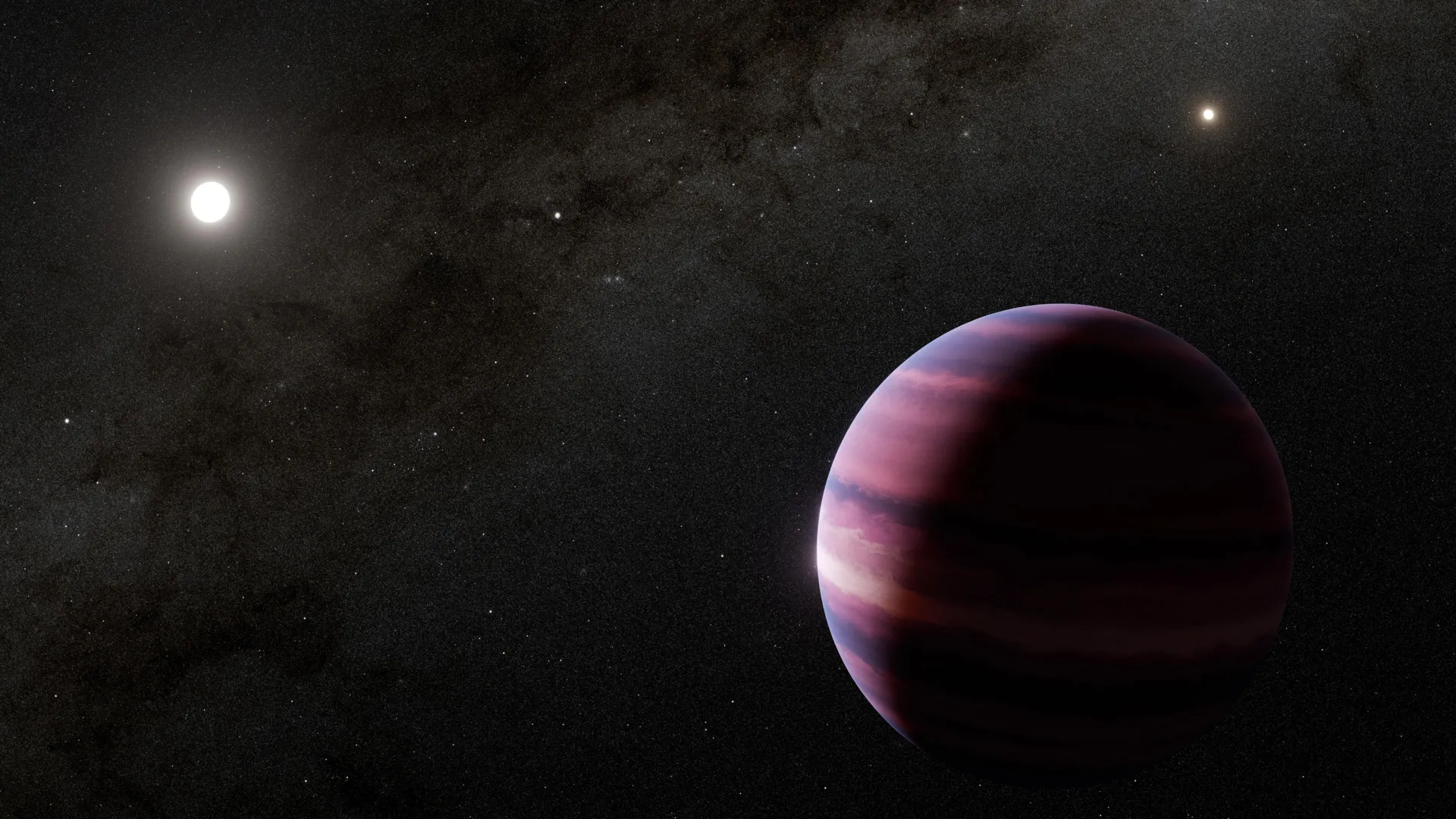
Astronomers using NASA's James Webb Space Telescope have found strong evidence of a giant planet orbiting a star in the stellar system closest to our own Sun. At just 4 light-years away from Earth, the Alpha Centauri triple star system has long been a compelling target in the search for worlds beyond our solar system.
Now, Webb's observations from its Mid-Infrared Instrument (MIRI) are providing the strongest evidence to date of a gas giant orbiting Alpha Centauri A. The results have been accepted in a series of two papers in The Astrophysical Journal Letters.
⁘With this system being so close to us, any exoplanets found would offer our best opportunity to collect data on planetary systems other than our own.
Yet, these are incredibly challenging observations to make, even with the world's most powerful space telescope, because these stars are so bright, close, and move across the sky quickly,⁘ said Charles Beichman, NASA's Jet Propulsion Laboratory and the NASA Exoplanet Science Institute at Caltech's IPAC astronomy center, co-first author on the new papers.
⁘Webb was designed and optimized to find the most distant galaxies in the universe. The operations team at the Space Telescope Science Institute had to come up with a custom observing sequence just for this target, and their extra effort paid off spectacularly.⁘
Several rounds of meticulously planned observations by Webb, careful analysis by the research team, and extensive computer modeling helped determine that the source seen in Webb's image is likely to be a planet and not a background object (like a galaxy), foreground object (a passing asteroid), or other detector or image artifact.


Comments
Post a Comment