Designer Microbes Aid Space Exploration Efforts
 Source: See here
I n the summer of 2013, NASA's Curiosity rover celebrated its first birthday inside a dusty red Martian crater, more than 100 million miles away from home. To mark its one-year landing anniversary, scientists programmed Curiosity to vibrate at frequencies corresponding to the notes of the "Happy Birthday" song.
This lonely birthday celebration drew a deluge of sympathy, with people commenting, "When humans land on Mars, we better...give that rover a hug!" on NASA's video . More than a decade has elapsed since then, but space agencies have yet to launch a crewed mission to the Red Planet.
Scientists have attempted to tackle this using an innovative approach.
"When I was in grad school, the person I did my thesis with would always say, 'You got to think of what the problem is, and then remember that biology has already solved that problem,'" recalled Frances Donovan , a biochemist at NASA Ames Research Center. "You just have to go find the biology that solves that problem."
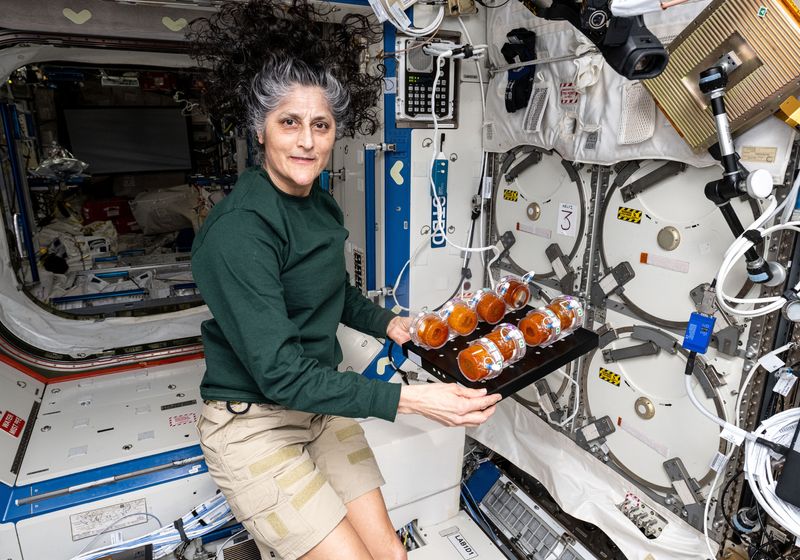
To meet this need, Donovan and her colleagues have been testing an approach similar to making fermented foods like yogurt and kefir.
"This is an age-old process that humans have been using to make and preserve nutrients for themselves," said Donovan. "And we've been doing it in clearly nonsterile conditions for literally close to 10,000 years."
Once the astronauts have sufficiently tested the yeast, Donovan hopes that she and her team will be able to send dehydrated pellets to space and astronauts can choose from a buffet of nutrients such as riboflavin, folate, vitamin K, or even caffeine, "Because we're probably not going to fly coffee trees anytime soon," she said.


Comments
Post a Comment