Future Planets Revealed In Unprecedented Detail
 Reference: Visit website
Headlines:
Home | Center for Astrophysics | Harvard & SmithsonianHow can we expand the limits of human knowledge further into the unknown? The Center for Astrophysics is a collaboration between the Smithsonian Astrophysical Observatory and Harvard College Observatory that's designed to ask big questions about the universe, build the tools needed to answer them, and share the resulting discoveries with the world.
"The coming decade will be an extremely exciting time for astrophysics with the next generation space- and ground-based telescopes being built and coming on-line. The CfA's strength is the expertise of its scientists and researchers across the full electromagnetic spectrum from the X-rays through to the radio and sub-mm. This year, we are developing a 10-year scientific strategic plan to answer some of astronomy's biggest questions. Our work with the Smithsonian to develop nationwide education and outreach programs will bring astronomy to school kids across America."
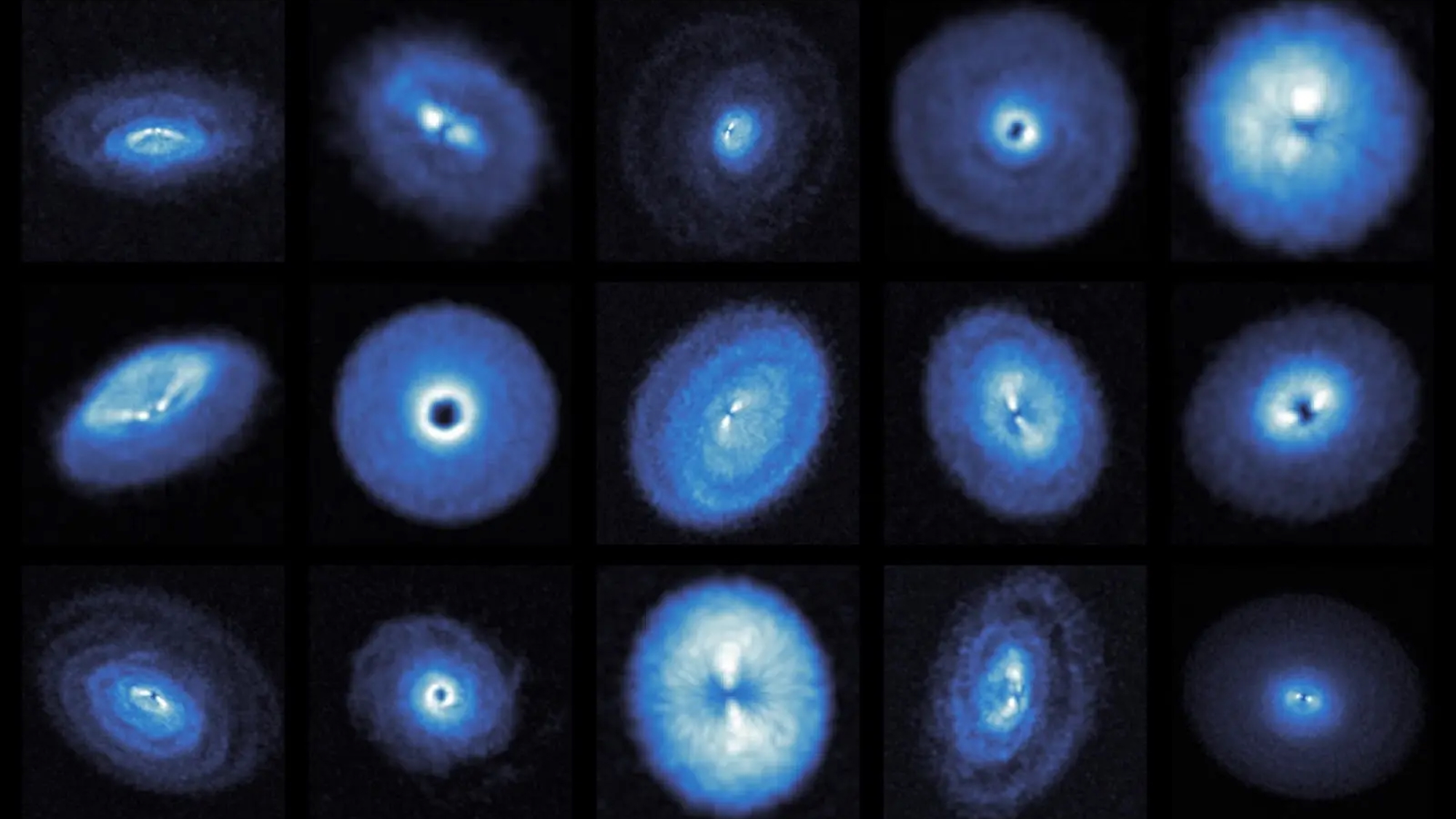
Our solar system is approximately 4.6 billion years old, but countless planetary neighborhoods are still just getting their start. Identifying and studying these newcomers isn't always easy, but thanks to recently developed techniques an international research team has captured some of the sharpest images ever seen of protoplanetary disks inside more than a dozen early star systems .
The discoveries are the latest from the exoALMA project, an international collaboration that uses an instrument called the Atacama Large Millimeter/submillimeter Array (ALMA) in Chile to scan the skies. But instead of searching for a planet's direct light, astronomers used ALMA to identify the effects of potential planetary subjects on their cosmic surroundings.
"It's like trying to spot a fish by looking for ripples in a pond, rather than trying to see the fish itself,⁘ explained Christophe Pinte , a project co-leader at Monash University's Institute of Astrophysics and Planetology in Australia.
Pinte and colleagues started by designing new calibration approaches and refining their analysis methods. The team focused particularly on aligning observations taken at different times, while also flagging and eliminating unwanted distortions and noise in the data. They then applied these methods to massive datasets collected by ALMA from 15 young star systems in order to identify potential protoplanet hotspots.
"The new approaches we've developed to gather this data and images are like switching from reading glasses to high-powered binoculars," said principal investigator Richard Teague . "They reveal a whole new level of detail in these planet-forming systems.


Comments
Post a Comment